
School Trust Lands
Oklahoma
Oklahoma occupies its own corner of the school-trust map. The 1906 Enabling Act delivered the two-section grant — sections 16 and 36 of every township — but Oklahoma's geography did not deliver intact townships. Large parts of the future state had already been allotted under treaties with the Five Tribes and other tribal nations; the school sections inside those areas could not be conveyed in land. Congress wrote a cash substitute into the deal, paying out roughly $5 million in lieu of acres that did not exist for the state to receive. Oklahoma is therefore the field's cash-substitute case study — a 2-section state on paper, a hybrid in practice, with both the management problem of physical sections and the management problem of a federally compensated cash corpus.
What is more remembered in the trust field is the Oklahoma case study in trust enforcement. The Oklahoma Education Association sued the state to force market-rate grazing leases on school sections after watching adjacent private lands collect multiples of what the trust was being paid. The teachers' association was not popular for filing the suit — many of its own members, and many local school-board members, were the same people leasing the underpriced ground — but the case went forward and the rates moved. The episode is one of the cleaner examples of a beneficiary class enforcing its own trust rather than waiting for the trustee to act.
(as of June 2024)
On May 20, 1785, the Continental Congress provided land to support schools as each new state joined the union. “There shall be reserved the lot No.16, of every township, for the maintenance of public schools within the said township.” The federal school-land grant ultimately reached a national scale, and school-trust lands still span tens of millions of acres across the public-land states. Public accounting gathered by ASTL documents more than $100 billion in school-trust assets and more than $1 billion in annual distributions in the most recently reconciled national accounting; current fifty-state figures are being rebuilt state by state. However, few educators or members of the public know about school trust lands. Advocates for School Trust Lands is sharing this grand history of America’s founding vision for schools, hoping that over time Americans will know of school trust lands and their support for public schools.
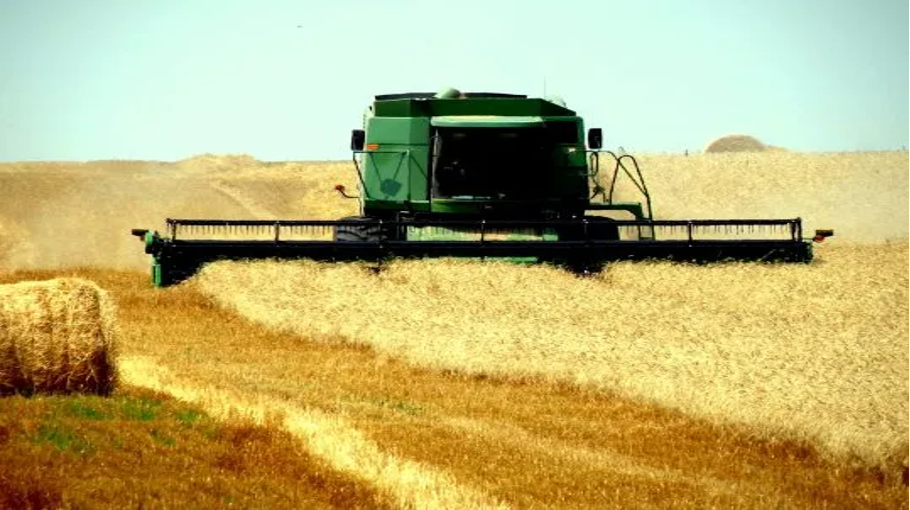
In 1890. prior to statehood, 2 million acres of school lands were granted by Congress to Oklahoma to support common schools. The granted lands are part of a “sacred trust” between Oklahoma and Congress, requiring the state to act with undivided loyalty to schools as it manages the lands and trust fund created from the lands. Oklahoma received Sections 16 and 36 but received no school land within established Indian designations. Of the original grant, 726,000 surface acres and 1.1 million mineral acres remain.
To compensate for lower acreage for schools, Congress paid $50 million to Oklahoma’s Common School Permanent Fund. Both lands and funds are managed by the Commissioners of the Land Office (CLO) composed of the top five statewide elected officials: Governor, Lieutenant Governor, State Auditor and Inspector, State Superintendent of Public Instruction, and Secretary of Agriculture. The Governor is the Chair of the Oklahoma Land Board and appoints the Secretary to administer the trust. Secretary Dan Whitmarsh currently serves as the chief administrator of the trust.
The minerals section manages 1.1 million mineral acres for all beneficiaries. The school mineral rights are located in almost all of the 77 counties in the state. There are 4,500 active oil and gas leases and an additional 100,000 mineral acres are managed for several state agencies. To maximize revenue, a precise inventory of what is owned, leased and available is maintained. Oil and gas lease sale auctions are conducted quarterly on-line. Only bids that meet or exceed fair market value are considered. Since 2007, the oil and gas lease auctions have yielded over $300 million in bonus revenue distributed directly to the beneficiaries. Mineral bonus revenue is significant to Oklahoma schools.
Oklahoma is at the intersection of three major interstate highways and has always ranked high in various economic indices like jobs, friendly to business, quality of life, and demographics. With 726,000 acres owned since statehood, the land office offers many locations for commercial and industrial developments and short and long term commercial leases.
Each October, approximately one-fifth of state school land is leased at public auction for agricultural farming and grazing, as well as for outdoor sport and recreational use. Revenues received from these auctions support Oklahoma schools and colleges. Tracts which go unleased at public auction are offered on a first come, first served basis through the end of the year. Remaining unleased tracts are offered through a sealed bid auction the following year.
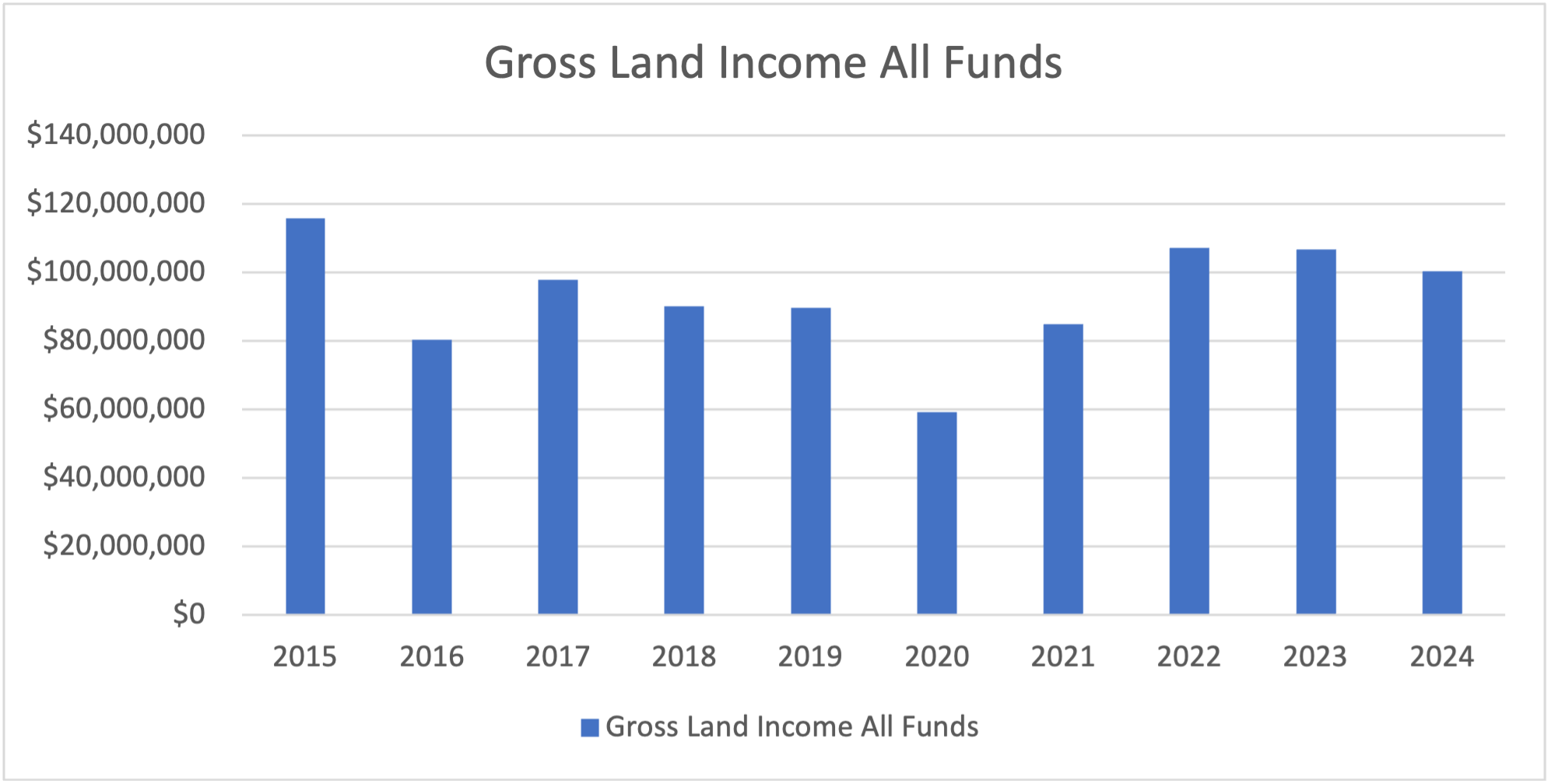
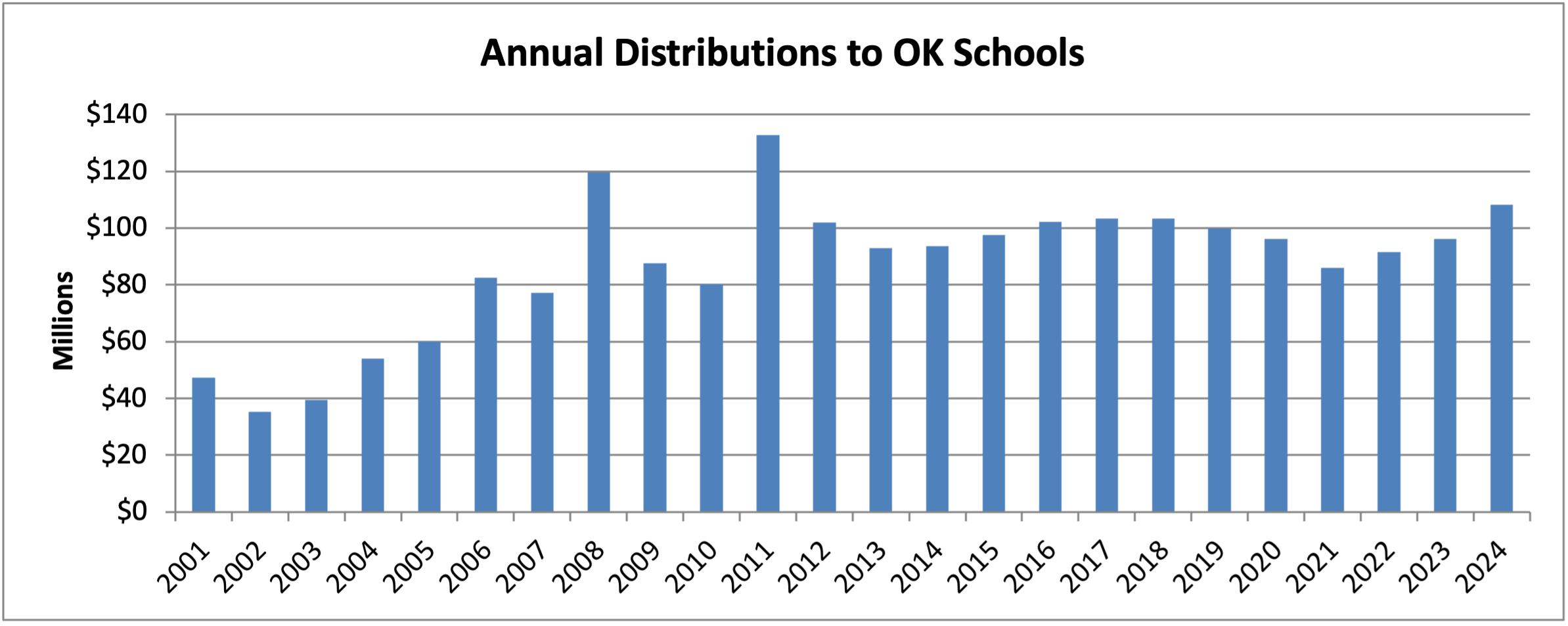
All income from land sales, mineral royalty from production, and investment gains are invested in the Common School Permanent Fund. All other income including surface rent, mineral lease bonuses, delay rentals, dividends, and interest, less the expenses to manage the lands and invest the permanent fund, are distributed to school districts monthly. The annual records of the distributions by school district are available at www.clo.ok.gov/resources/records-reports.
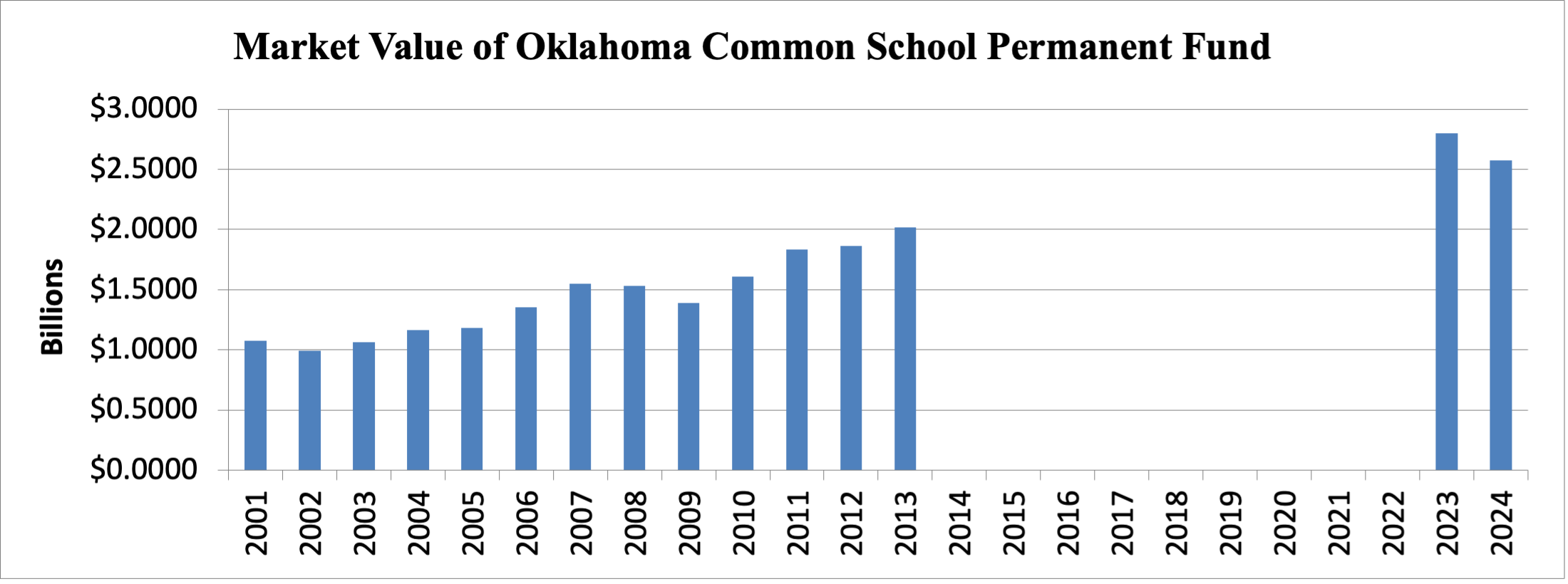
The market value of the FY 2024 Common School Permanent Fund is $2,575,745 with a 5-year total weighted return of 4.12%. Oklahoma no longer invests all revenue in their Common School Permanent fund invested most revenue sources in their Common School Permanent Fund. In the past, Oklahoma put all bonus revenue in their fund. The Oklahoma school fund has not risen like neighboring Texas, New Mexico, Wyoming, Arizona and Utah who invest all revenue providing greater revenue long-term to schools.
Revenue from the trust is part of the general revenue provided by the State of Oklahoma to public schools. Each state uses trust distributions differently. Wisconsin funds school libraries, Washington and Colorado build schools in rural parts of the state, Arizona funds classroom needs, Minnesota and Oklahoma provide additional revenue directly to each district, and Utah allows parents, teachers and the principal in every school to develop academic programs to improve student performance.
FY2024 at a Glance
| Acres granted at statehood | 2,000,000 (1890; Sections 16 & 36) |
|---|---|
| Surface acres currently held | 726,000 |
| Mineral acres currently held | 1,100,000 |
| FY2024 gross revenue | Awaiting consolidated public disclosure |
| FY2024 PSF market value | $2,575,745 (figure as stated in source; verify units) |
| FY2024 distribution to schools | Awaiting consolidated public disclosure |
| 5-year time-weighted return | 4.12% |
Data: ASTL FY2024 state report (Margaret Bird draft). Some figures are pending or carried from prior years where indicated.