
$1.8M/yr
Full-market hunting valuation
ASTL advocacy helped secure full-market payment for hunting on school trust lands.
For the beneficiaries
Nonpartisan advocacy, education, and collaboration for school trust beneficiaries.
Safeguarding millions of acres — and public endowments measured in the tens of billions of dollars.

1785
the first acre was a school
20
states, one mission
1785
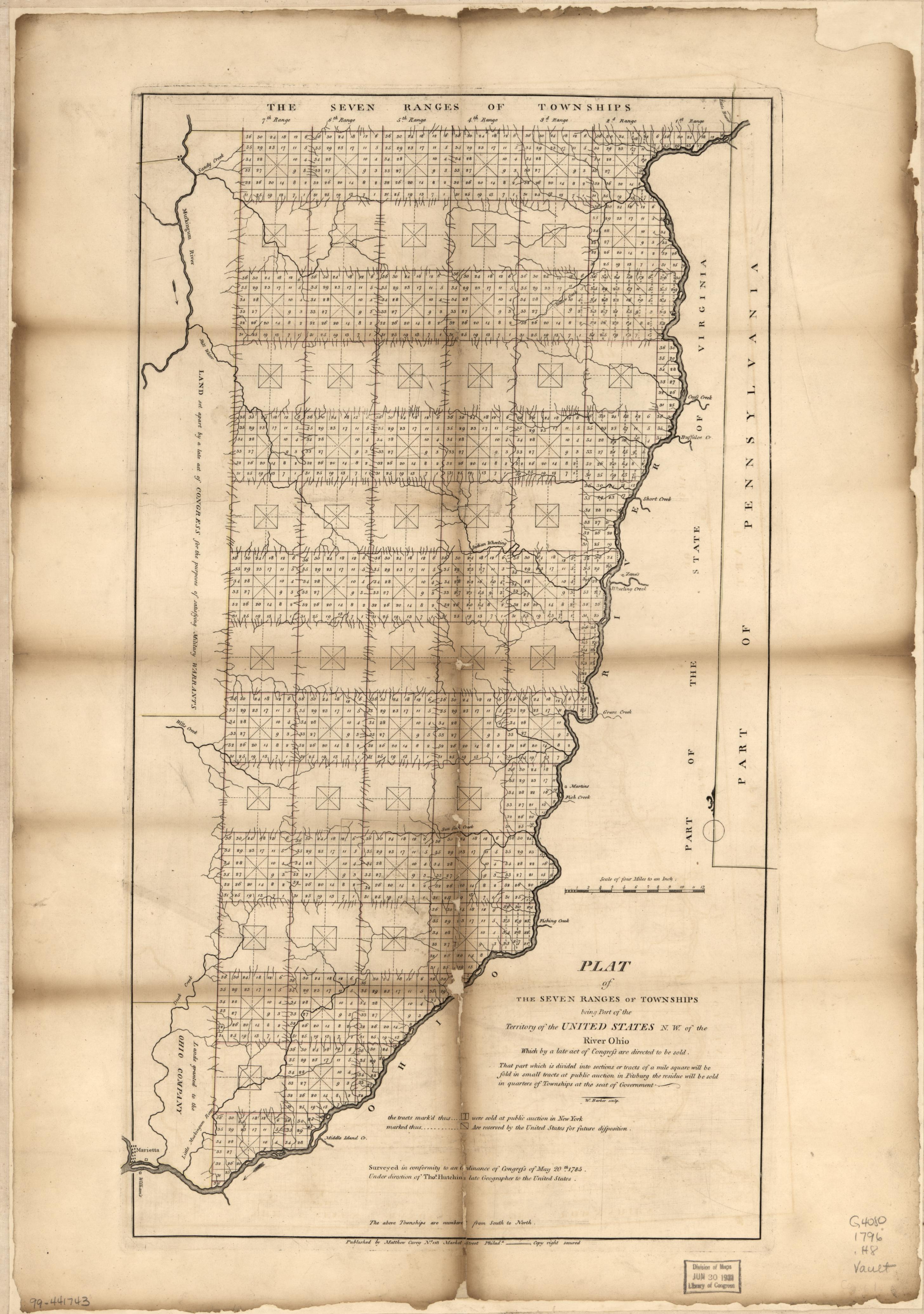
Congress reserves Section 16 of every township for the common schools
20
states hold school trust lands today
6
U.S. Supreme Court decisions on the school-land compact
137
years of unbroken Supreme Court authority
Advocates for School Trust Lands
Advocates for School Trust Lands is the national coalition of state advocates, scholars, and members working to ensure the twenty states that hold school trust lands fulfill their fiduciary duties to public schools — safeguarding millions of acres and public endowments measured in the tens of billions of dollars while current national totals are rebuilt state by state.
Last verified August 2026 — ASTL editorial review
Advocates for School Trust Lands
In 1785, before the Constitution was written, the new Confederation Congress reserved Section 16 of every township for the common schools.
It was the first act of the new nation. Two years later, in the Northwest Ordinance, the founders wrote that “schools and the means of education shall forever be encouraged.” They said forever explicitly, and they backed the word with land. In the nation's 250th year, the Advocates for School Trust Lands hold the states to that promise — acre by acre, statute by statute, generation by generation.
A forever gift, to forever schools, for a forever democracy.
— Margaret Bird's phrase, quoted here as her words.
Doctrinal foundation
Eight centuries of Anglo-American law stand behind the school trust. The promise is not aspirational. It is the founding charter.
Northwest Ordinance, Article III
In July 1787, two months before the Constitutional Convention finished its work in Philadelphia, the Confederation Congress sitting in New York enacted the Northwest Ordinance. Its Third Article declared:
“Religion, morality, and knowledge, being necessary to good government and the happiness of mankind, schools and the means of education shall forever be encouraged.”
The Ordinance itself classified the article as part of an unalterable compact between the original States and the new territories — “forever remain unalterable, unless by common consent.” The First Congress, sitting under the new Constitution, re-enacted the Ordinance in 1789 to “continue to have full effect.” The promise was not aspirational. It was, and remains, the founding charter for how American government would treat schools.
Common-law trust anchoring
The doctrine that a sovereign holds property for the benefit of others, and is bound by fiduciary duties when it does so, is not an American invention. It is the inheritance of more than five centuries of Anglo-American law.
Magna Carta (1215) established that even the Crown is bound by law in the management of property held for others. Chapters 4 and 5 placed wardship under a fiduciary obligation: the guardian must preserve the estate and restore its corpus “without destruction or waste.” Chapter 39 anchored the due-process root. The sovereign-as-trustee doctrine begins here.
The Statute of Charitable Uses (1601) — 43 Elizabeth I, chapter 4 — enacted by Parliament under Queen Elizabeth I, was the first English statute to enumerate the purposes that English law would recognize as “charitable.” Its preamble names, by way of canonical example, “the maintenance of schools of learning, free schools, and scholars in universities.” That phrasing has been the anchor of Anglo-American charitable-trust doctrine for four centuries.
By the time the Confederation Congress enacted the 1785 Land Ordinance setting aside Section 16 of every township for the support of schools, the trust framework had a 570-year continental lineage — sovereign-as-trustee from 1215, schools-as-charitable from 1601, codified into American law in 1785 and 1787 and applied by the United States Supreme Court six times across the 137 years that followed. The framers were not improvising. They were inheriting.
The six-case spine
The federal compact under which Western states received their school lands is not a relic of frontier law. The United States Supreme Court has spoken to it six times across the long nineteenth and twentieth centuries, each time confirming that the bargain binds state action.
One hundred thirty-seven years of unbroken Supreme Court authority. The federal compact framework binds state action. It is not a metaphor, not a guideline, not a relic. It is the law.
The Sacred Compact
ASTL's oversight is rooted in the moral and constitutional requirements that govern the administration of school trust lands and funds — five core fiduciary duties, mirrored in our own work.
America's School Trust Library
In June 2026 the ASTL board voted to explore a strategic alliance with America's School Trust Library — a free public library devoted to the record of the school-land gift, and an Oregon nonprofit public benefit corporation since its incorporation on July 21, 2026. The Library keeps A Forever Gift, the campus at schooltrusts.org.
The school trusts are betrayed when memory fails — when the grants, the duties, and the case law scatter beyond the reach of the parents, boards, and legislators who need them. The Library exists so the record outlasts news cycles and administrations: one shelf, publicly kept, that every advocate can cite.
The past
The law and the 240-year, 50-state history of the school-land gift — the library and the evidence behind it.
Enter →The present
One movement, two organizations — the national coalition and its Oregon chapter, fighting for the gift right now.
Enter →The future
What these trusts teach the institutions being built today — and where the next generation of school-trust lawyers signs on.
Enter →Every ASTL pillar leans on this record. To educate, advocates and policymakers need the same citable history. To advocate, accountability needs receipts — dated figures, primary sources, an unbroken paper trail. To collaborate, partners need a shared shelf to build on. The Library is where that shelf lives.
The Library is an independent effort. ASTL's board has voted to explore — not yet form — a strategic alliance; this page will record that relationship as it develops.
Choose your entry point
Tuned entry sequences for the people who use this site — advocates on the ground, reporters on deadline, agency staff inside the record, and funders looking for leverage.
For advocates
See what's missing in your state's accounting. Join the work.
Open the Briefing Room →For reporters
Start with dated figures, disclosure status, and the public accounting gap before building a story.
Open the Ledger →For agency staff
See the public scoring of your state's disclosure. Send a correction or source.
Open the State Tracker →For funders
The disclosure gap. Where your support unlocks recovery audits, beneficiary visibility, and a reproducible state-by-state ledger.
Open the Ledger →Proven results
$1.8M/yr
ASTL advocacy helped secure full-market payment for hunting on school trust lands.
$5M
An Attorney General opinion stopped planned grazing-lease refunds that would have cost schools.
$1B to $4B
A professionally led independent task-force request preceded Utah fund growth from about $1 billion to nearly $4 billion in six years.
The twenty public-land states
Twenty states still hold school trust lands today. Hover or tap a state for fund value, FY2024 distribution, and status. Click to open its page.
Hover or focus a trust-lands state to see its disclosure and trust posture. Click or press Enter to open its page. Non-trust states are shown for context only.
A mission rooted in foundational law
The concept of dedicated land trusts for public education is rooted in early federal acts — beginning with the Land Ordinance of 1785 — and is secured by state constitutions and specific enabling legislation. These lands, granted at statehood, are held in perpetual, inviolable trust, creating a rock-solid, long-term policy foundation for our work.
Constitutional mandates and case law firmly establish the financial purpose of School Trust Lands as absolute, but political influences often threaten this fiduciary duty. When public servants prioritize political ambitions or special interests over their role as trustees, the consequences fall on schoolchildren. ASTL fills that knowledge gap — enhancing public and political understanding of trust principles so that solutions can integrate other public interests without sacrificing the financial support our public schools were promised.
In the nation's 250th year, Advocates for School Trust Lands holds states to that promise — acre by acre, statute by statute, generation by generation.
The bigger campaign
On July 24, 2026 the Coos County Circuit Court granted the State summary judgment in Oregon's beneficiary suit and canceled the trial that had been set for August. The national work was never contingent on that date. ASTL keeps building the field either way: scholarship, lawyer capacity, state inventories, and reform architecture.
From ASTL leadership
Tonia Day ·
A dangerous convergence of ecological stress, federal resource failures, and state-level political directives is crushing rural school districts. Mount Baker is the blueprint for fighting back.
Read essay →Margaret Bird ·
Utah shows what disciplined trust architecture and public constituency can build. Oregon shows why beneficiaries still need enforceable fiduciary remedies.
Read essay →Daniel Crowe (via Margaret Bird) ·
Article VII §7 of the Nebraska constitution builds a wall around the principal of the school trust. LB1072 would tear that wall down.
Read essay →Four doors into the work — watch the films, learn what we do, explore the Library, or join the advocates already at the table.
ASTL's short film and the 1990 Utah archive film show why the trust matters before the numbers arrive.
Open the films →Education, advocacy, and accountability work that holds state trustees to the fiduciary standard their constitutions require.
Learn more →America's School Trust Library keeps the permanent public record of the school-land gift — the law, the history, and the evidence behind the fight.
Enter the Library →Individuals, local groups, state organizations, agencies, and industry partners all have a place in the coalition. Membership starts at $25.
Become a member →Join the movement
Individuals, local groups, state organizations, agencies, and industry partners all have a place in the coalition. Membership starts at $25.
Recently in school trust history
Colorado — the Centennial State — admitted on the 100th anniversary of independence with the standard school-section grants for the support of public schools.